
Hiking to the Golden Larches on Frosty Mountain
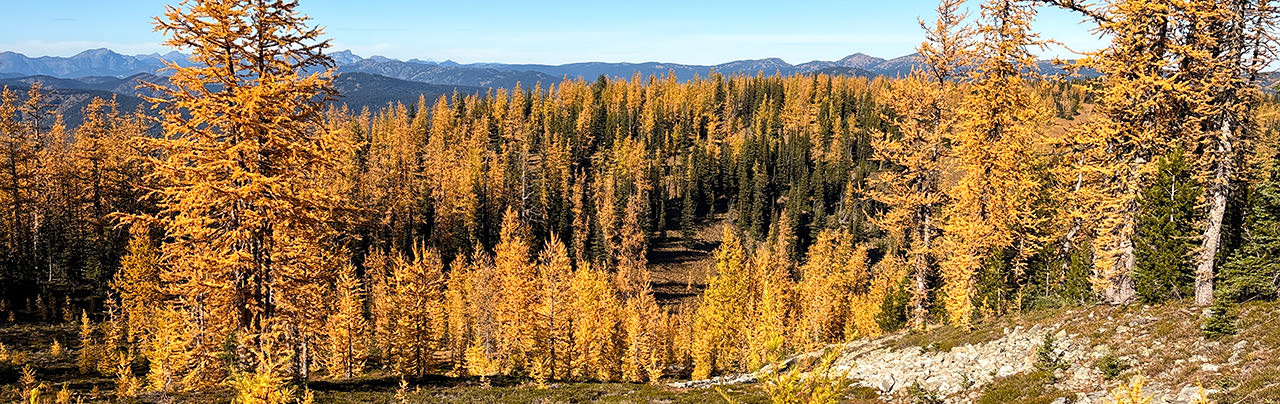
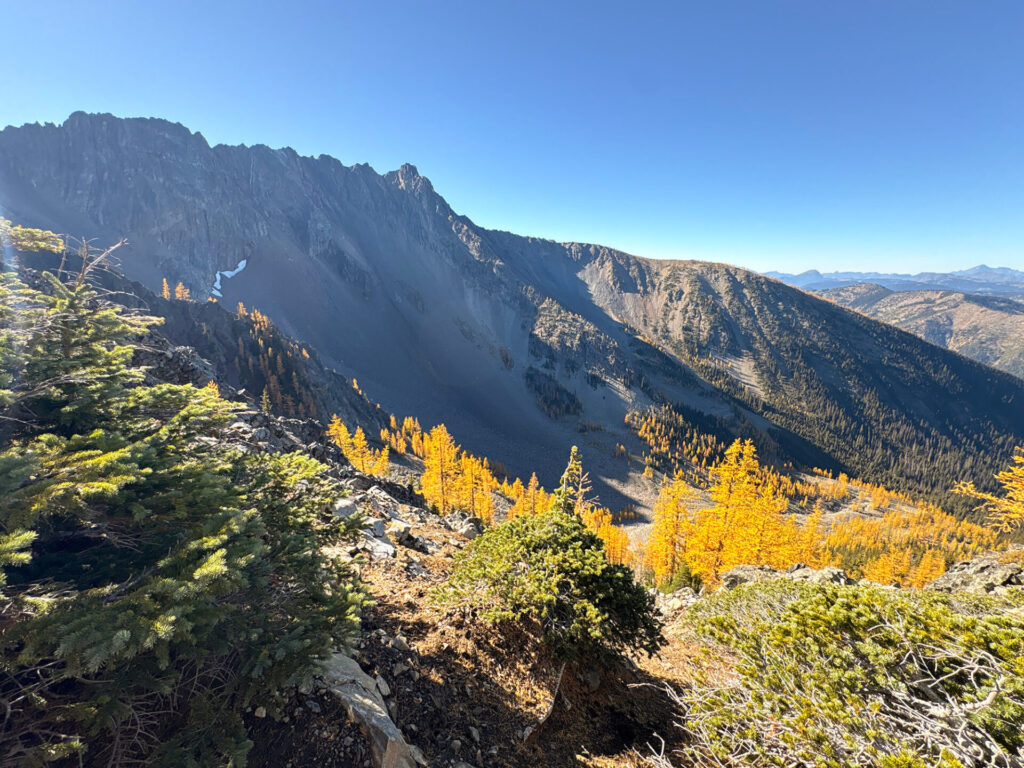
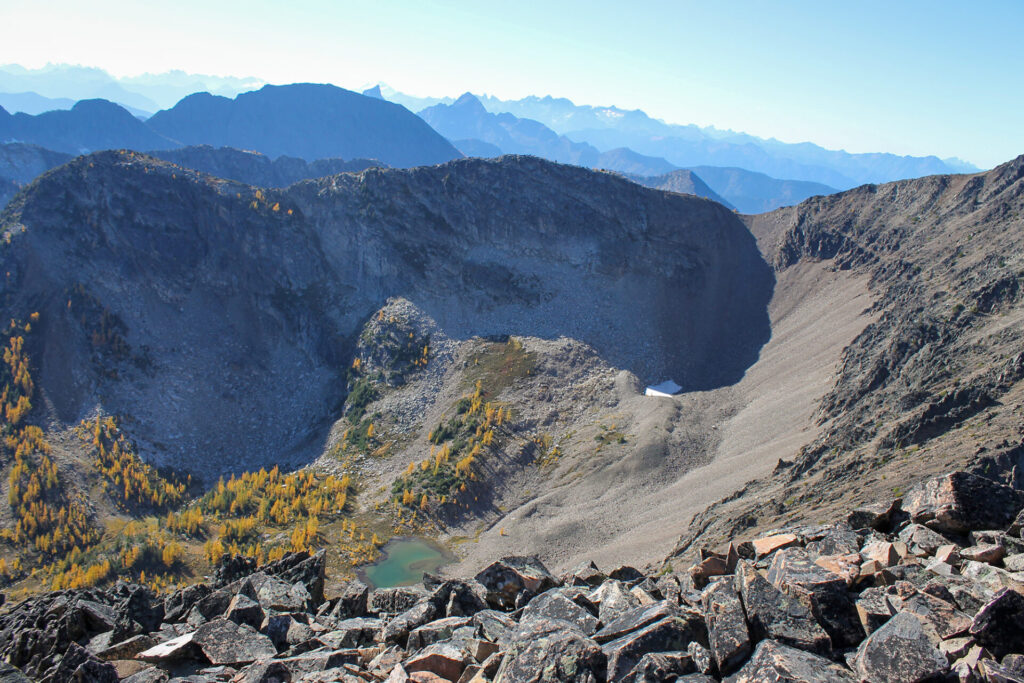
High on the shoulder of Frosty Mountain in Manning Provincial Park, a small grove of alpine larches turns a brilliant golden colour for a couple of short weeks before the needles drop and winter moves in.
It’s one of the most memorable fall hikes in southwestern BC, and has become one of the busiest trails in late-September and early-October. The hike is challenging but the opportunity is limited because of the short time the needles are golden and the variable weather and trail conditions at the start of the fall season.
Why Larches Turn Gold
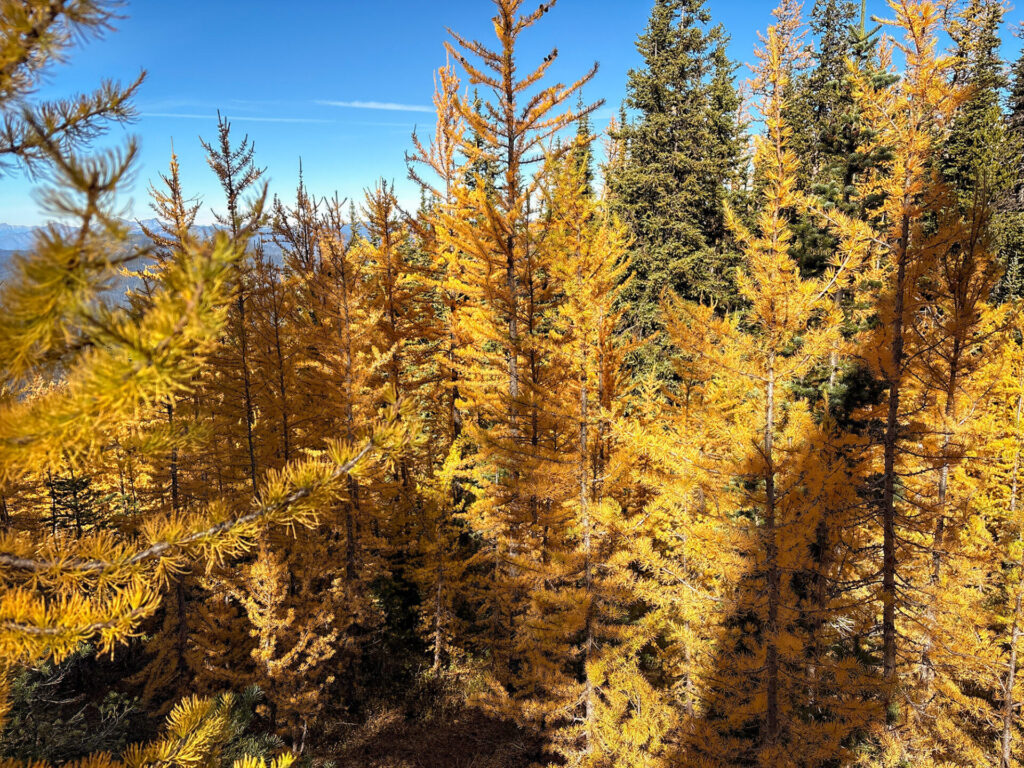
Larches are an oddity in the tree world: they are conifers that behave like maples. They grow cones and needles like a pine or fir, but they are deciduous, shedding every needle in the fall and growing a fresh, soft green set each spring.
The colour change works the same way it does in a broadleaf tree. As the days shorten and the nights turn cold, the tree stops producing green pigment and pulls valuable nutrients like nitrogen back into its branches and trunk to store for next year. With the green gone, the yellow pigments that were in the needles all along are finally visible. Larches don’t produce the red pigments that maples do, which is why they glow yellow and gold and not orange or crimson.
Dropping needles is a clever survival strategy at treeline. Bare branches carry less snow, catch less wind, and don’t lose moisture through the long frozen months when the roots can’t replace it. It’s a big reason alpine larches can survive in places too harsh for most other trees.
A Rare Tree in a Small Corner of the World
There are only about a dozen species of larch on the planet, and all of them live in the cold parts of the Northern Hemisphere: the vast forests of Siberia, the European Alps, the mountains of Japan, China and the Himalaya, and the boreal and mountain regions of North America. Deciduous conifers of any kind are rare. Outside of the larches, the short list includes the bald cypress of the southeastern United States and the dawn redwood of China.
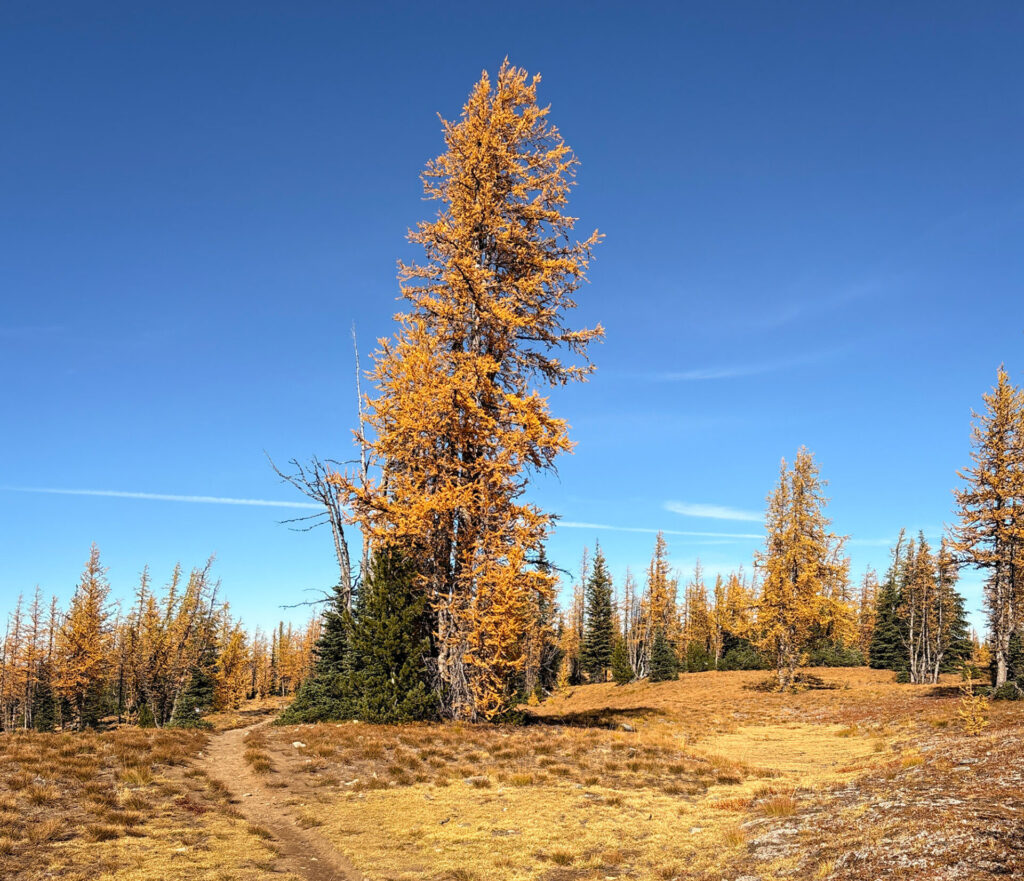
The trees on Frosty Mountain are alpine larches (Larix lyallii), also called subalpine larches, and their range is smaller still. They grow only in a pocket of the Pacific Northwest: the Rockies and Columbia Mountains of BC and Alberta, the eastern Cascades of Washington, and parts of northern Idaho and western Montana. They live high, usually near 2,000 metres elevation, on cold, rocky slopes just below the upper limit of tree growth.
Manning Park sits at the western edge of that range in BC, which makes Frosty Mountain the closest place to Vancouver to see them. The grove is also remarkably old. Despite their modest size, some of the larches here are estimated to be close to 2,000 years old, placing them among the oldest trees in Canada.
When to Go
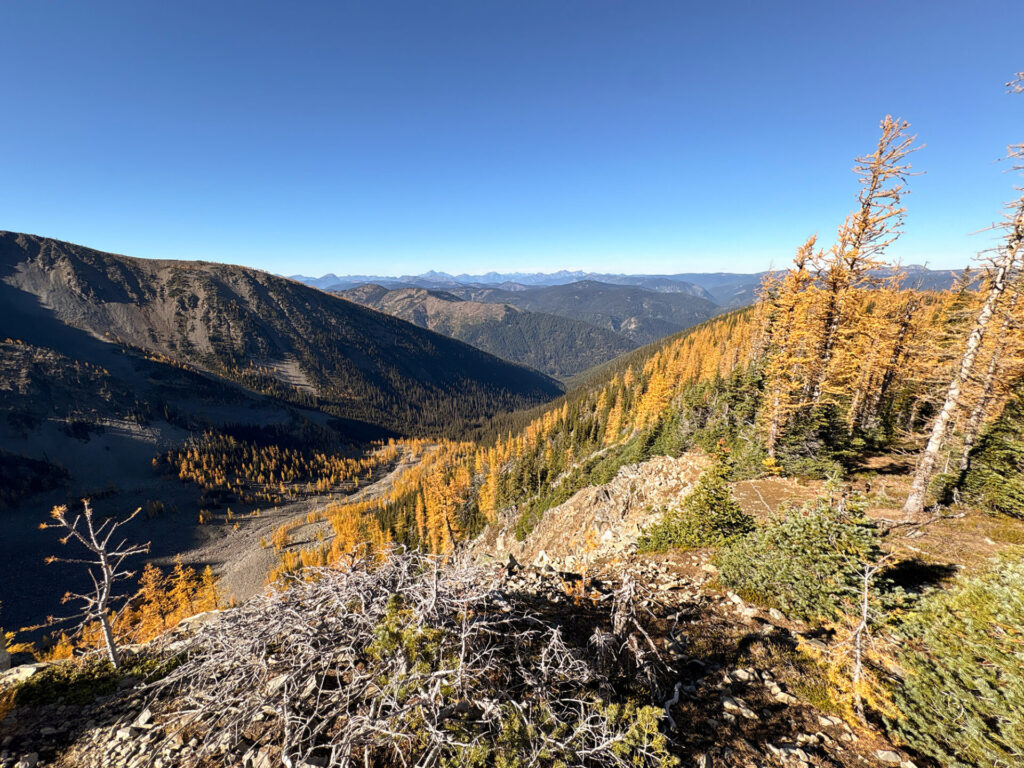
The larches on Frosty Mountain usually turn gold in the last week of September and the first week or two of October. Peak colour lasts roughly one to two weeks, and that’s it!
The exact timing shifts from year to year, and it’s easy to miss on either side. Go too early and the needles are still a pale yellow-green. In 2024, for example, hikers reported the trees had not yet turned by October 1. Go too late and a single windstorm or heavy snowfall can strip the branches bare overnight.
The Frosty Mountain Hike
To the Larch Meadows:
Distance: 18km roundtrip
Elevation Gain: 800 meters
Time: 6 – 7 hours
To the Summit of Frosty Mountain:
Distance: 22km
Elevation: 1160 meters
Time: 8 – 9 hours
The trail is difficult, requiring good physical fitness, good footwear, and proper preparation.
The trailhead for Frosty Mountain is located near the Lightning Lake day-use area, up the road from the Manning Park Resort. It’s about a 3-hour drive from Vancouver, following Highway #3 after passing Hope, BC.
If it’s a sunny weekend or statutory holiday during the golden larch season, expect the trail to be extremely busy. As of 2026, BC Parks does not require day-use passes, however staff are present to manage parking and traffic as the parking lot fills quickly and cars will have to park along the road, adding 1-2kms to your hike each way.
The trail leaves the lake and climbs steadily through a long series of switchbacks, with the occasional glimpse of Lightning Lake. Sections of the trail are narrow and rugged, so good footwear with treads is a must.
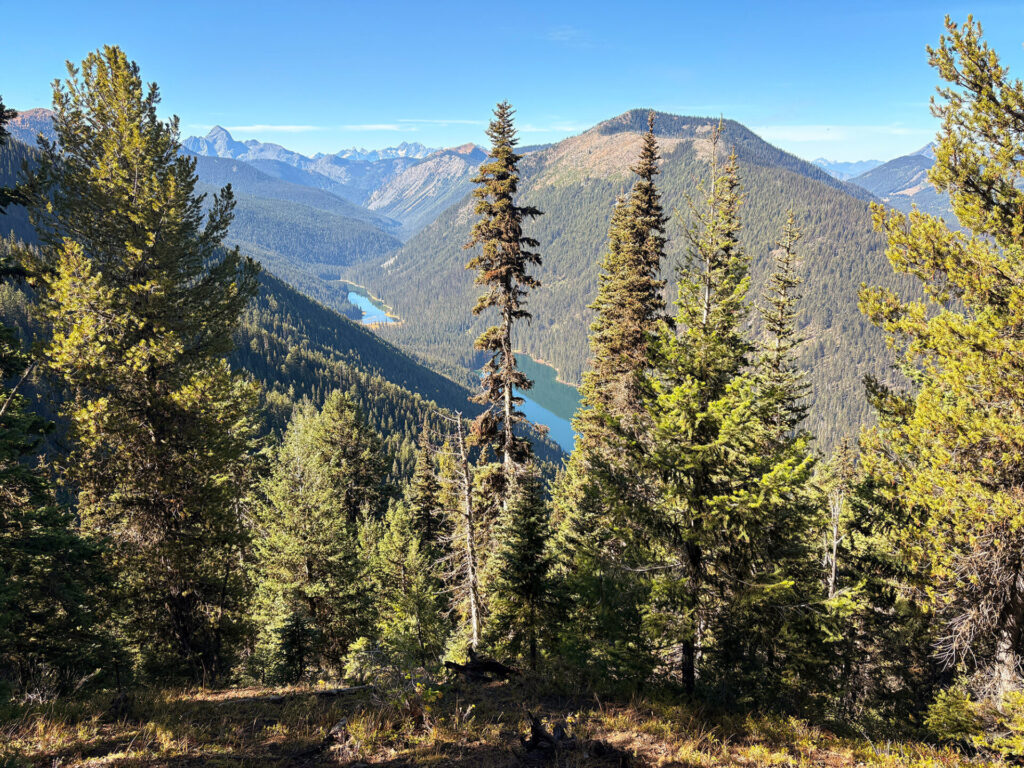
Eventually the trail levels and you move quickly through a long, relative flat section until you reach Frosty Creek Camp at around the 7km mark. This small wilderness campsite is a good place to stop for a snack and a common base for those making it an overnight trip.
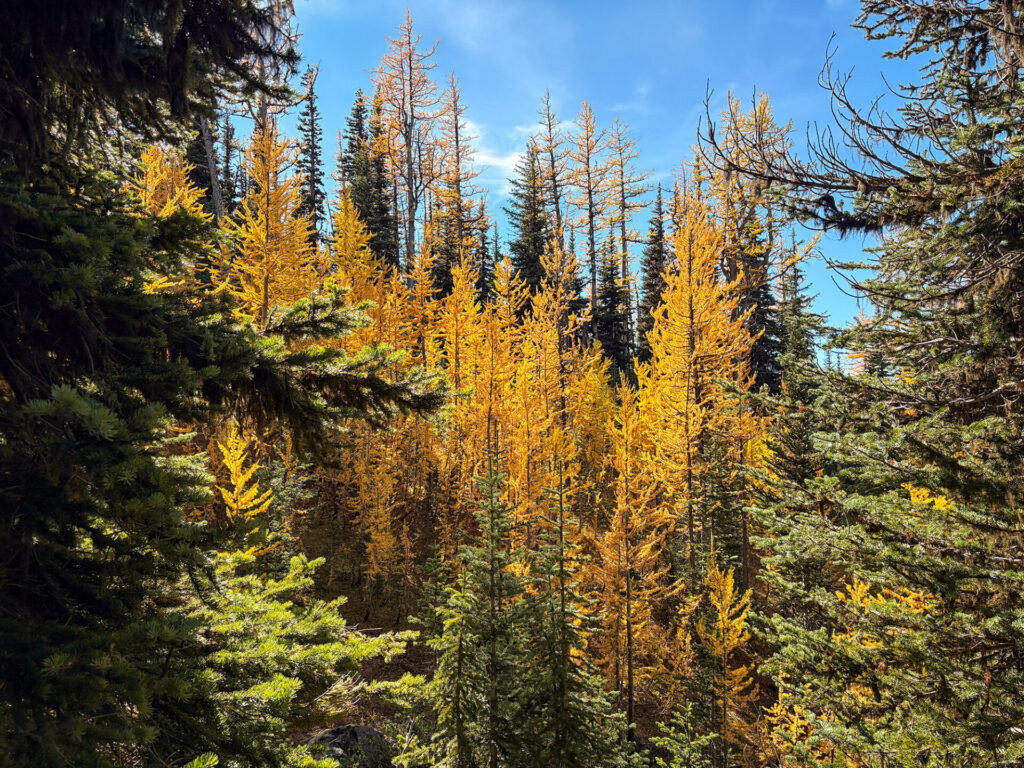
Continuing past the campsite, the trail climbs again and the forest begins to thin, as you reach the set of larches. A few minutes further up the trail and you’re walking through the heart of the grove on a broad plateau, surrounded by gold, with the rocky bulk of Frosty Mountain rising ahead. For many hikers wanting to just see the golden larches, this is the destination, and a great place to have lunch before turning around.
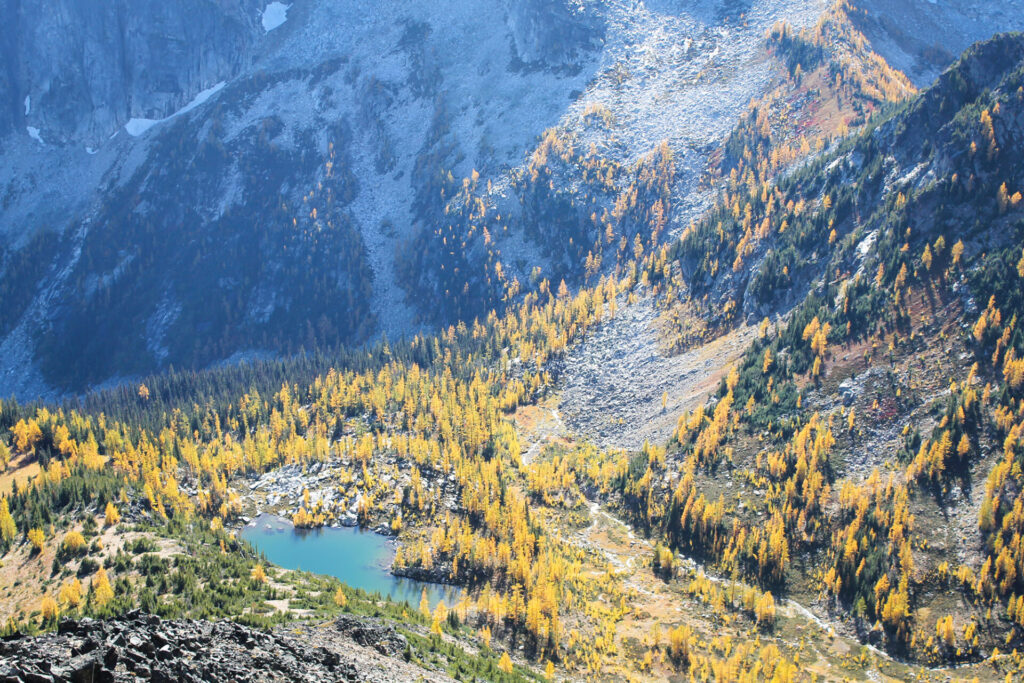
If you want to hike to the peak of Frosty Mountain, the trail continues above the treeline and up a steep slope of loose rock to the east summit of Frosty Mountain. At 2,408 meters it is the highest peak in Manning Park, and the view takes in the North Cascades on both sides of the border, with the larch meadows glowing far below. The final section is exposed and can be icy or snow-covered in the fall, so use caution and be prepared to skip it if the conditions are too slippery or dangerous.
How to Prepare
This is a full-day mountain hike in the shoulder season and it is important to plan properly. This includes:
- Start early. The days are short in October with sunset occurring around 6:30pm. The parking lot at Lightning Lake fills quickly on weekends. BC Parks has warned that latecomers may end up parking several kilometres from the trailhead. Aim to be hiking shortly after sunrise.
- Check the Manning Park forecast. The weather at the lodge can be very different from the weather at 2,000 metres. Look at a forecast for the elevation of the larches, not just the valley.
- Wear sturdy footwear. Waterproof hiking boots with good grip are the right choice for a long trail that may be muddy, frosty, or snowy.
- Dress in layers. You’ll warm up on the switchbacks and cool down fast in the open meadows. Bring a warm insulating layer, a waterproof shell, a toque, and gloves, even if the morning looks clear.
- Pack a headlamp. With 18km or more to cover, it doesn’t take much of a delay to end up finishing in the dark. A cellphone flashlight won’t be enough, especially with the ruggedness of the trail if you have to descend in the dark.
- Carry plenty of food and water. Bring more than you think you need. Frosty Creek can be low or dry by the fall, so don’t count on there being a water source.
- Bring the essentials. A map or offline GPS track, a first aid kit, and an emergency layer should all be in your pack. Cell service is limited in the park, so leave a trip plan with someone at home.
Tread Lightly
These trees have survived for centuries in thin soil and a growing season that lasts only a few months. The meadows around them are just as fragile and very slow to recover from damage.
- Stay on the main trail, even when it’s muddy or busy. Do not step off the trail for a photo.
- Don’t pull on branches or shake needles loose.
- Pack out everything you bring in, including food scraps.
- Keep dogs on a leash.
- Leave the drone at home. Flying one in a provincial park is illegal without permission from BC Parks.
Worth the Effort
The hike to Frosty Mountain is challenging. The drive is long no matter where you are coming from and the daylight hours are much shorter than in the summer. However, standing in a grove of ancient golden larch trees on a crisp fall day is an experience you won’t find anywhere else this close to Vancouver. Plan well, pick your day carefully, and enjoy one of the best fall hikes in British Columbia.
Comments that gratuitously attack or demean individuals or organizations are not acceptable. We reserve the right to remove comments or any other content we deem unacceptable in our sole discretion, including removing user names and profile pictures. For our full website terms and conditions including our legal guidelines for user postings and comments on www.vancouvertrails.com, please see our Terms of Use and Privacy Policy.